

I had resolved to visit St Catherine’s Church in the heart of lovely Eskdale during the depths of last winter after an icy walk up Green Crag. The weather could not have been more different when the opportunity arose earlier in the summer whilst Mish and I were at Eskdale National Trust Campsite and the sun shone all week. A bonus was our daughter, who has spent the summer living on an island in Morecambe Bay monitoring nesting terns had a day off and came up to see us.
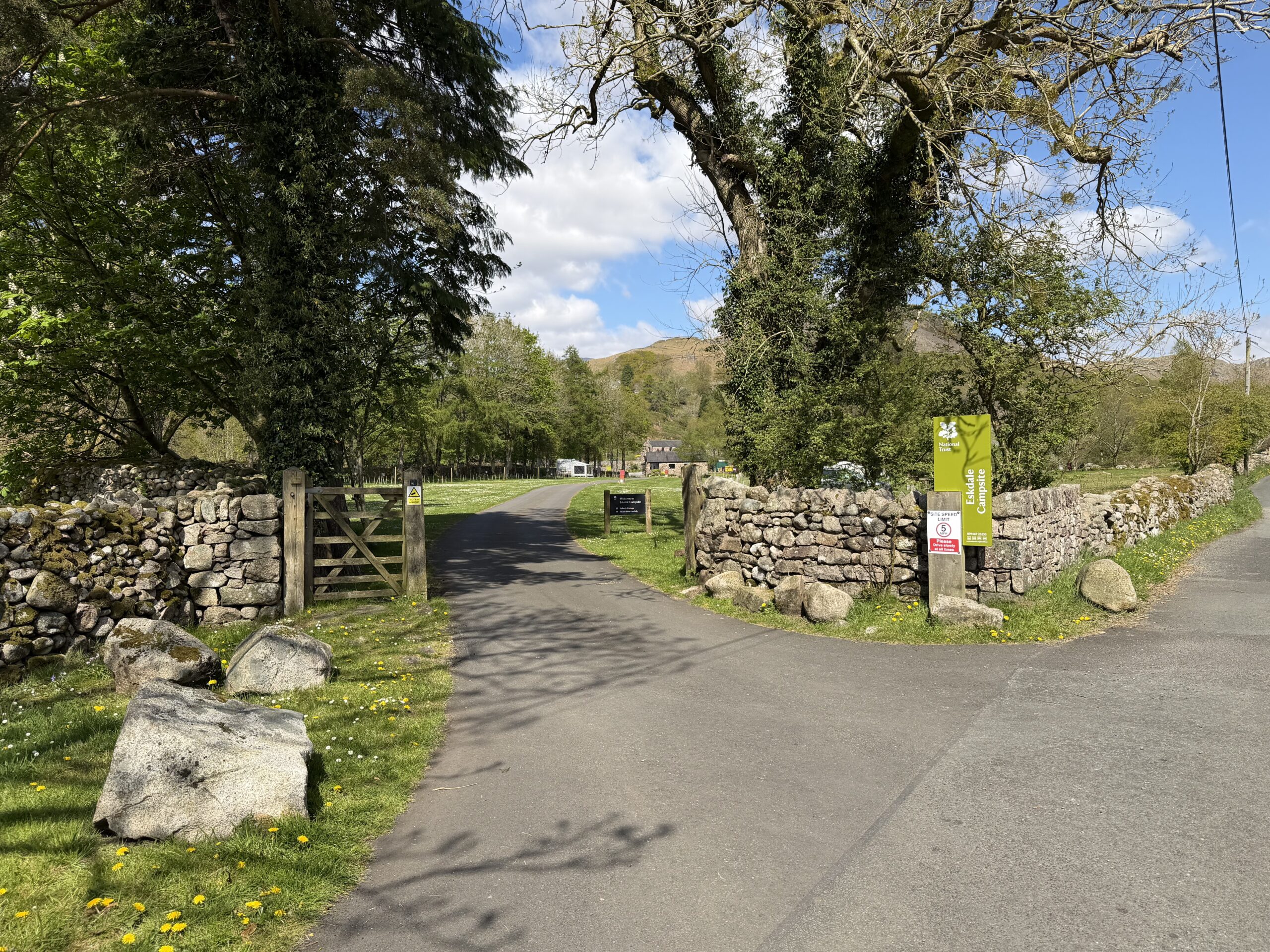
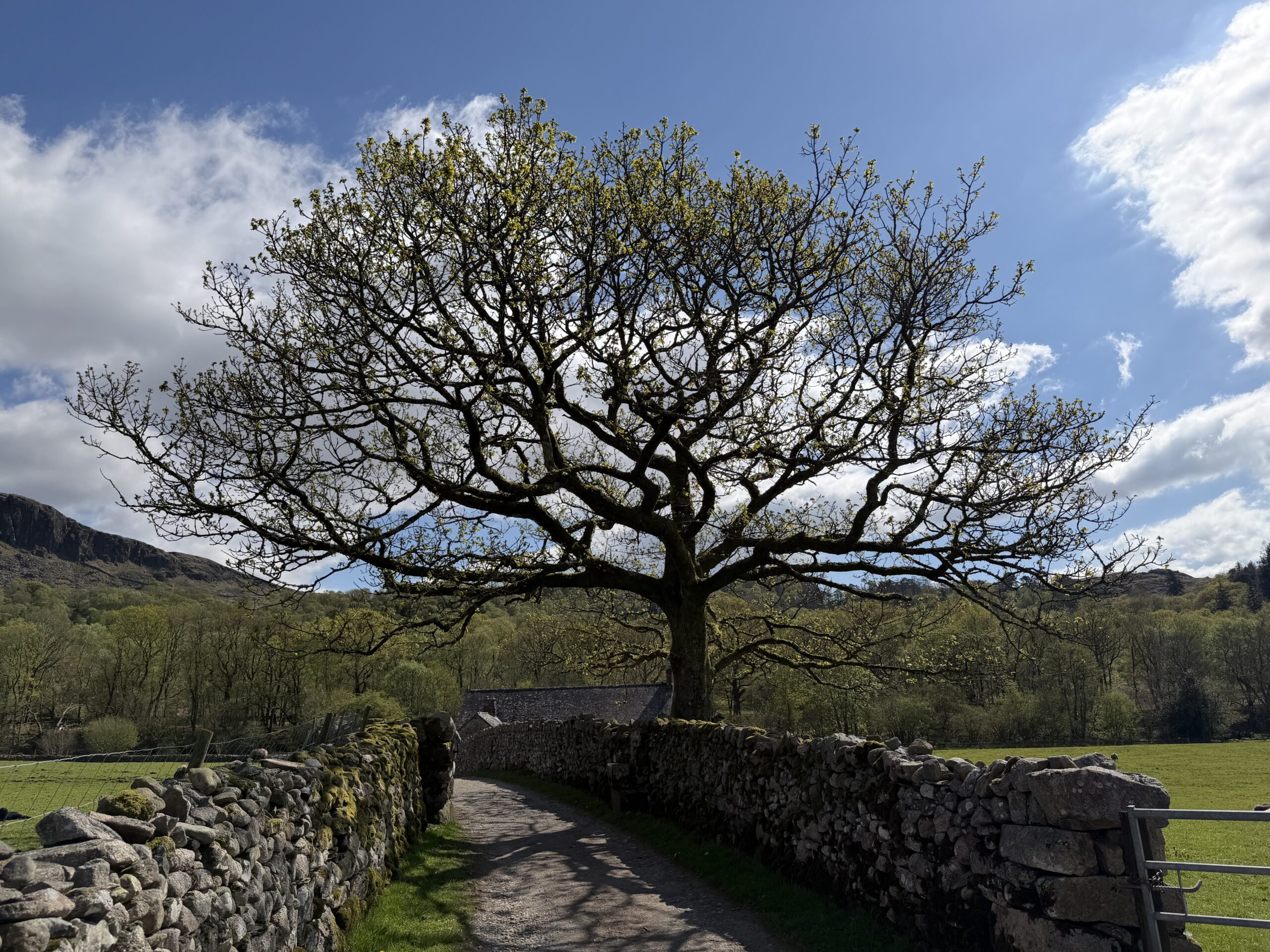
Leaving the campsite we follow the road down to Brook House Inn which is one of two excellent pub/restaurants in the little hamlet of Boot. At the crossroads there is a signpost pointing the way down a stone walled lane towards the church.
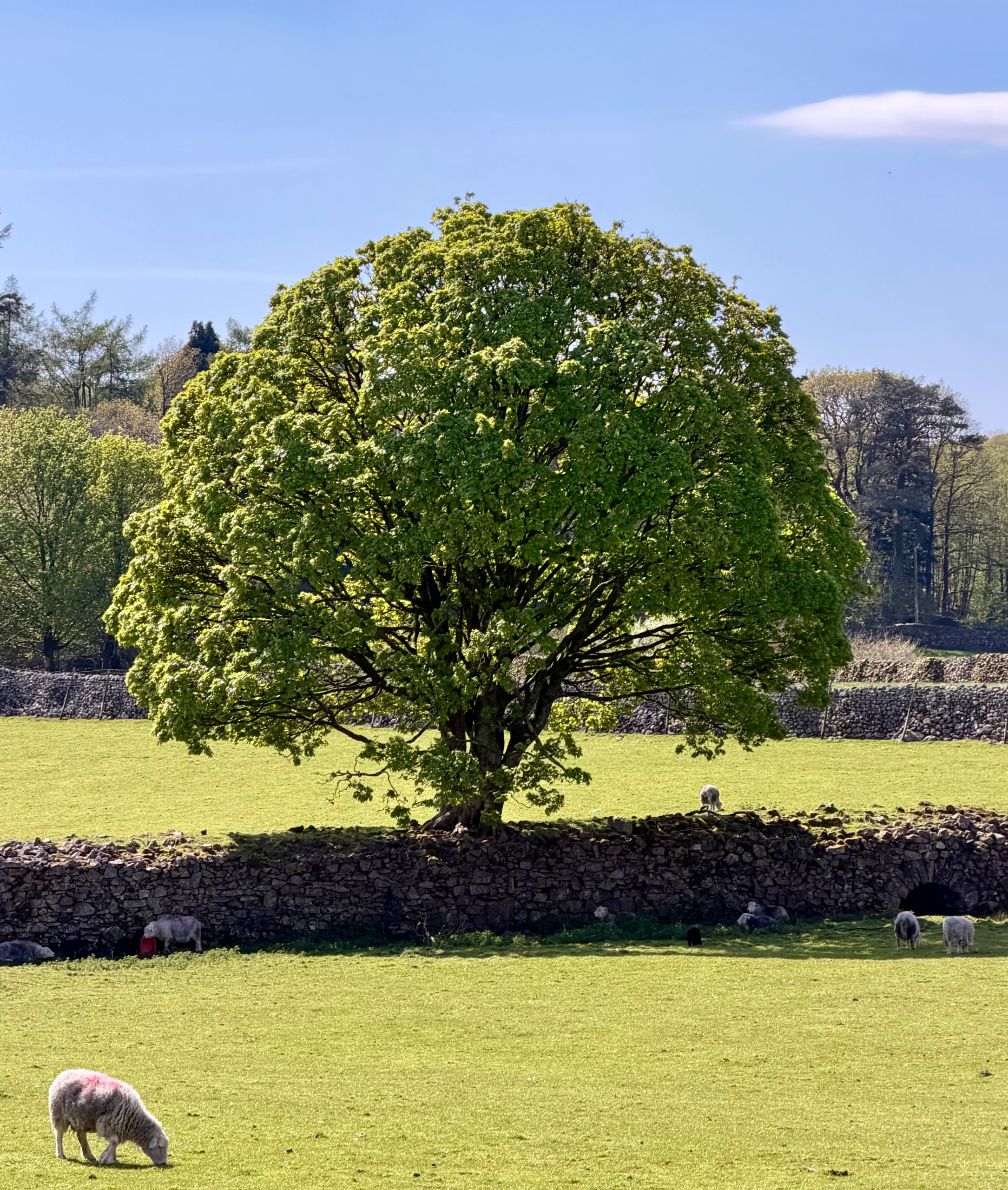
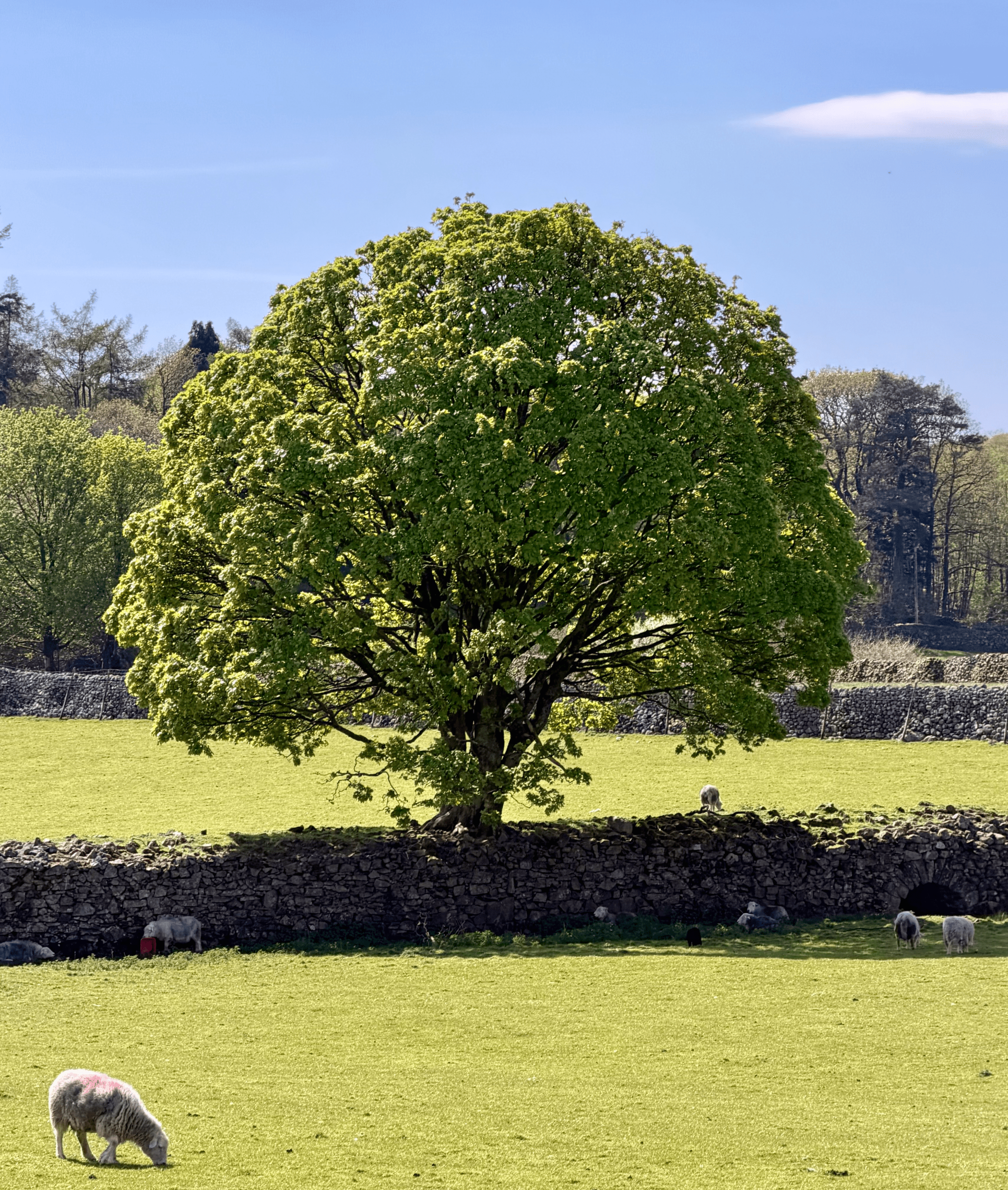
In the verdant green fields, delineated by ancient dry stone walls, white blobs of sheep graze nervously as sheep do, and mature sycamores and oaks stand solid and dependable, silent observers as seasons turn into years and years into decades.
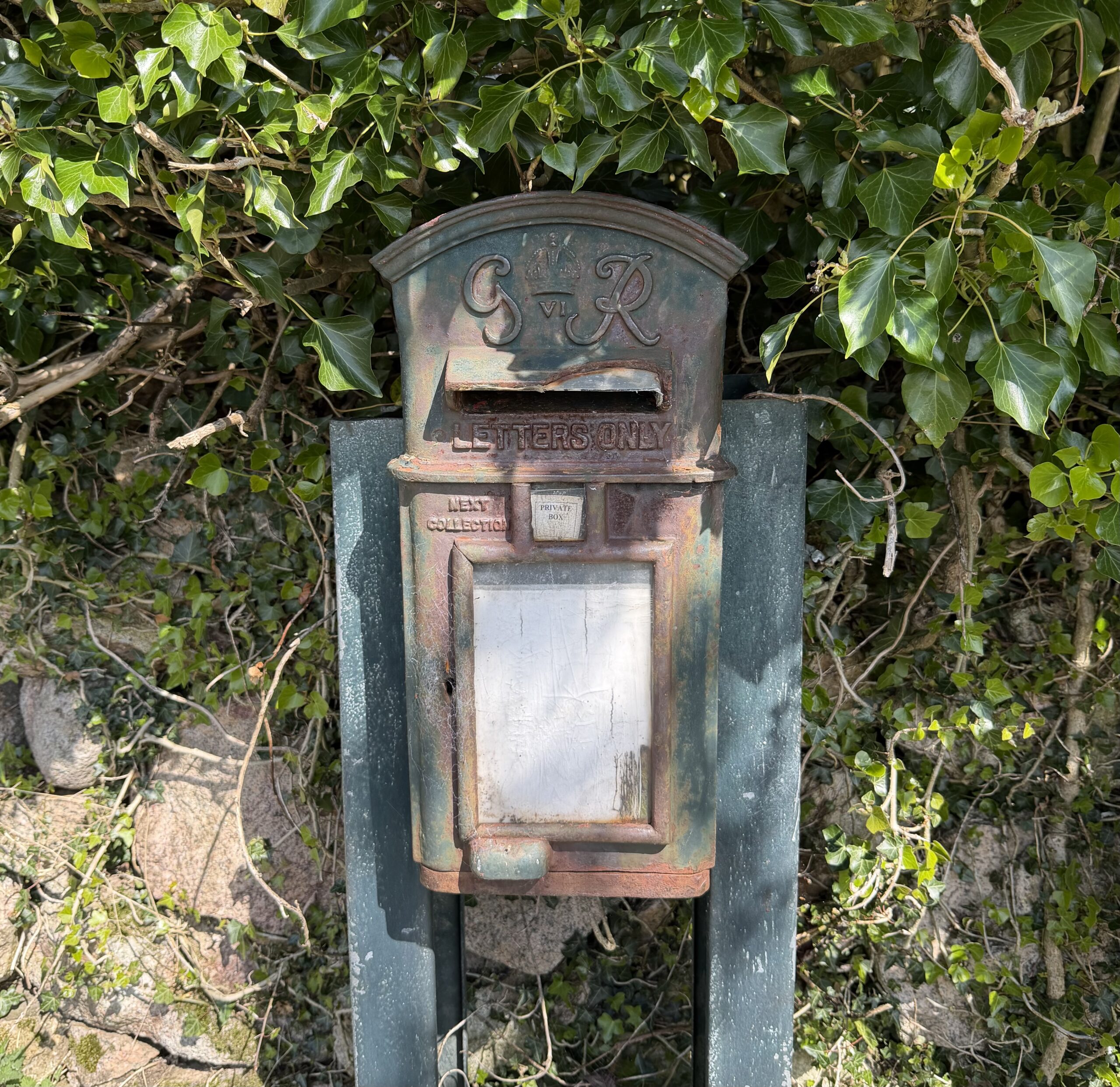
Halfway down the lane there is a George VI post box, now marked private that has been there since at least 1952. It’s a scene that if you returned to in a hundred years nothing but the sheep will have changed. Time stands still in Lakeland.
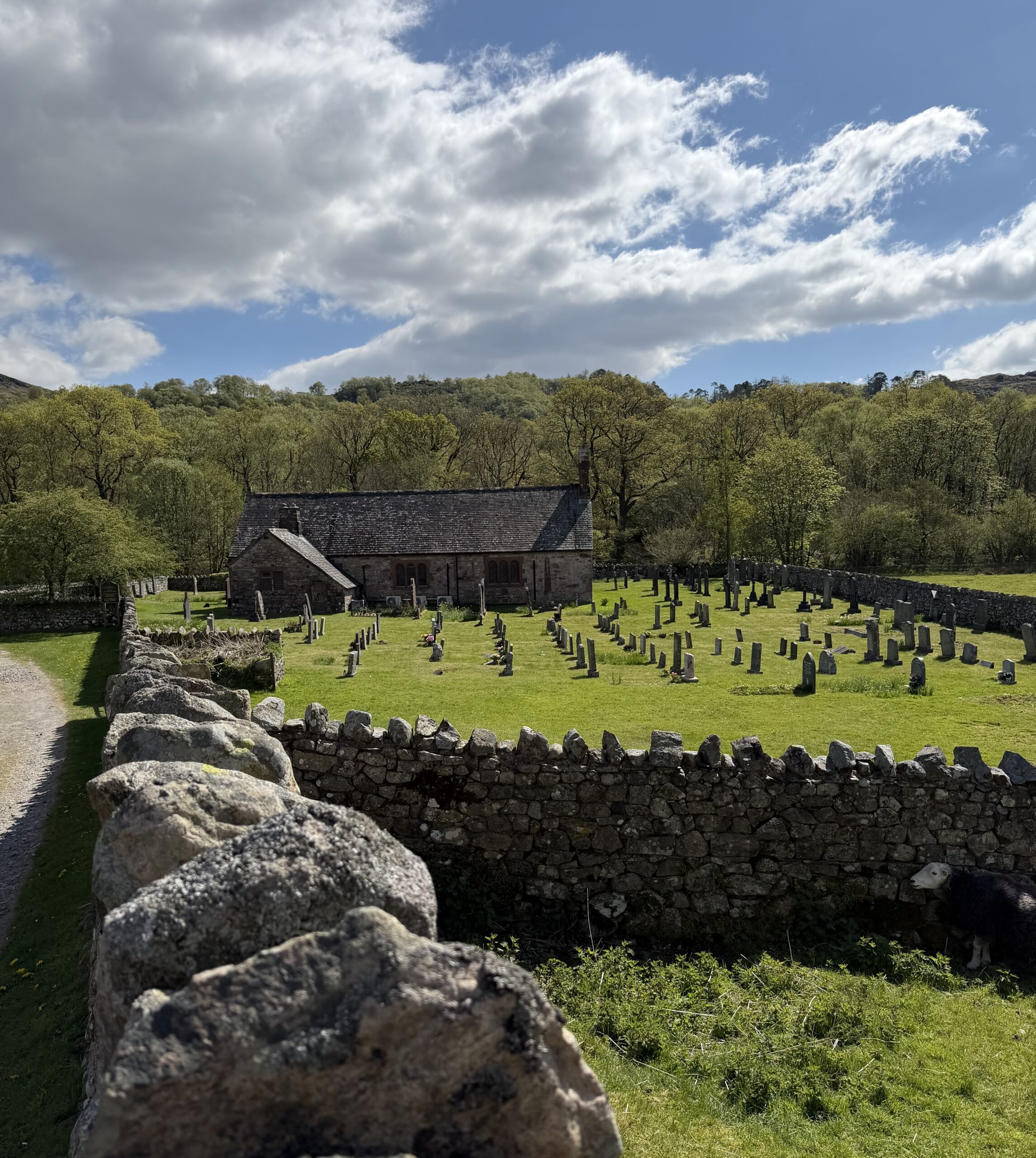
The St Catherine’s Church building we see today dates from the 14th century although there was an earlier 12th century chapel and tradition has it that it’s been a place of worship since the 6th century when a hermit monk used to live here and offer holy water and prayers of healing to passing travellers.
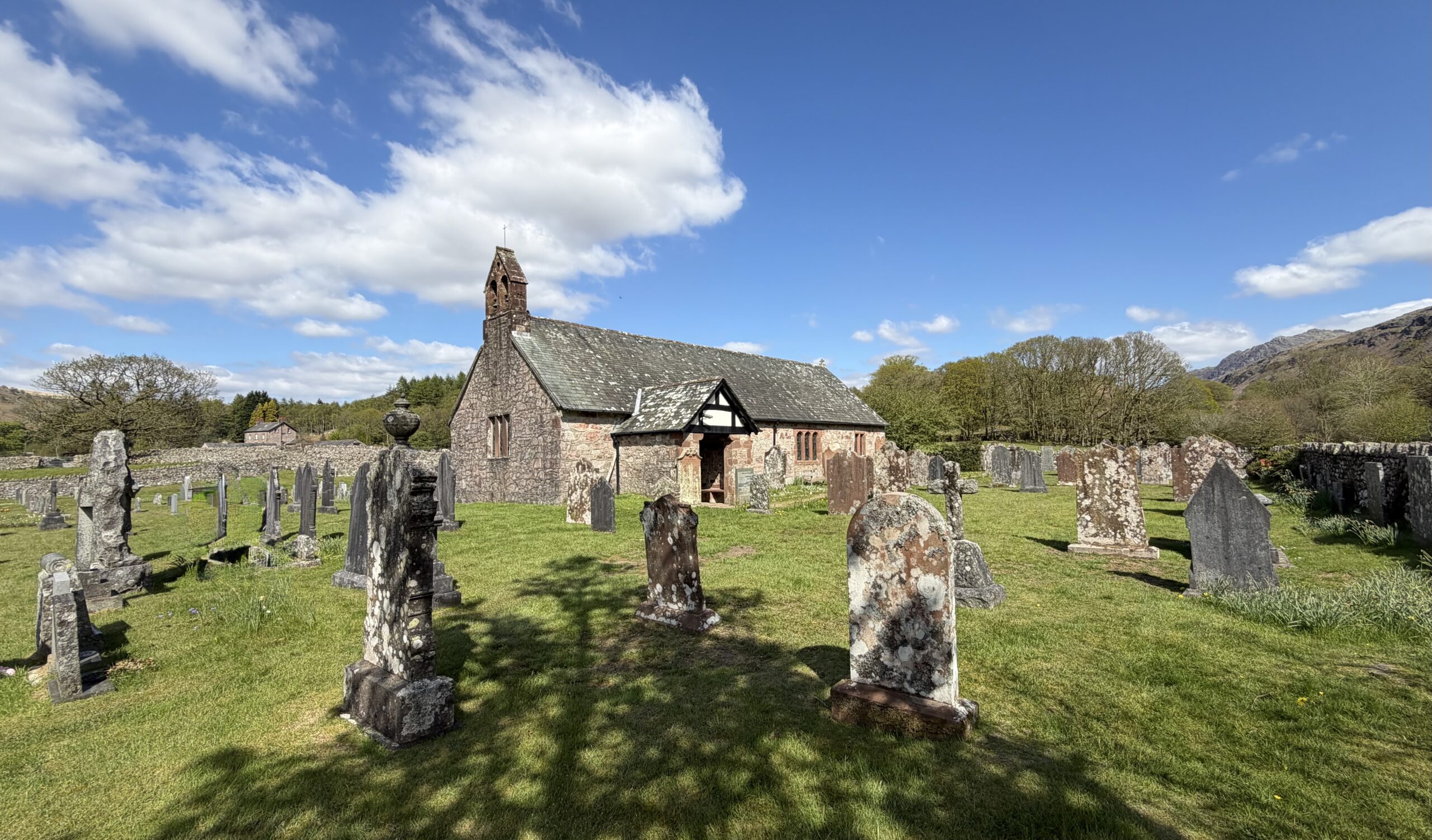
The 14th century building was restored in Victorian times but the east window, depicting Saint Catherine, The Good Shepherd and Saint Cecilia is still the original 14th century stained glass.

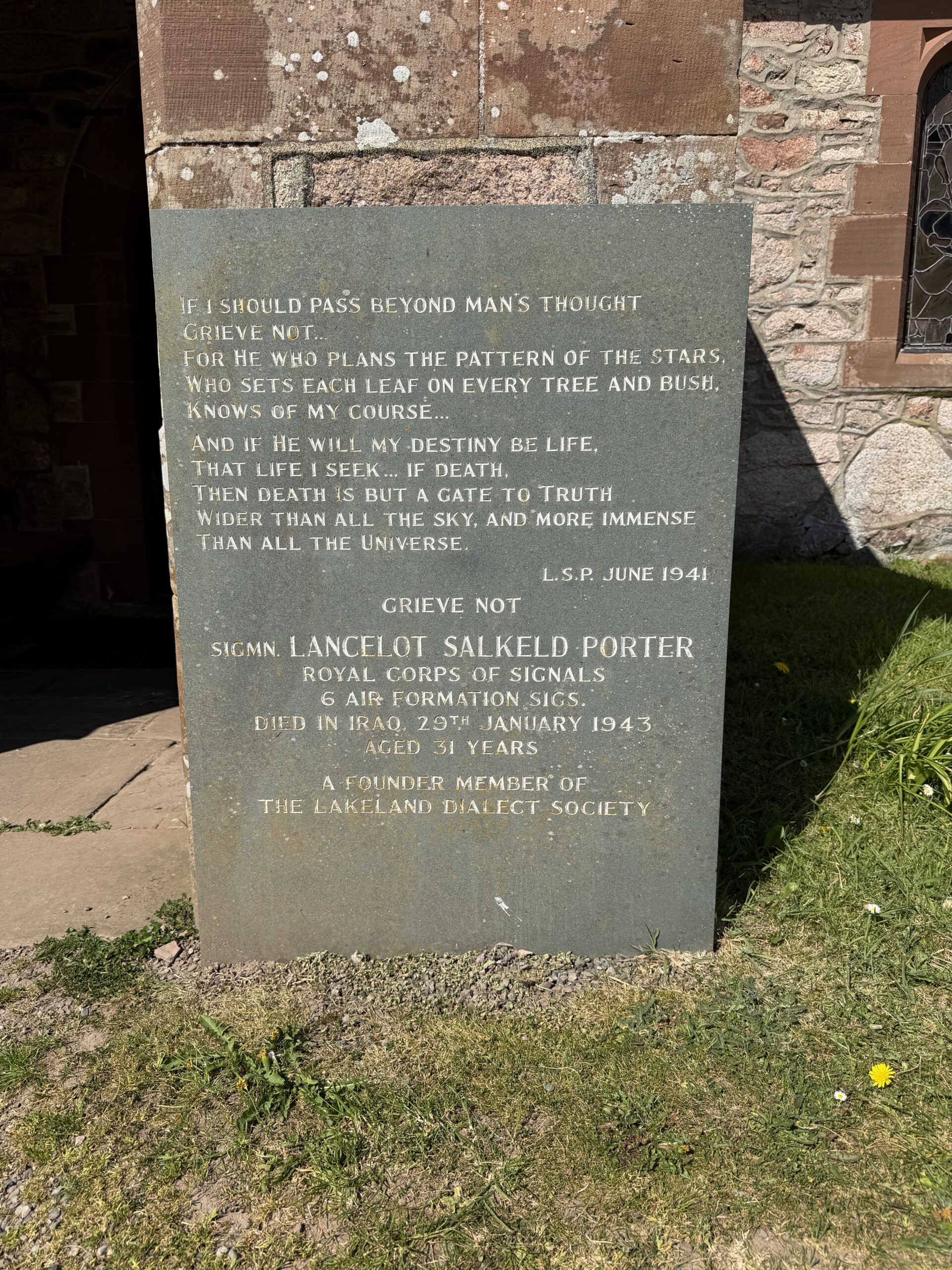
At the entrance to the church there is a grey slate memorial, engraved with a poem:
If I should pass beyond man’s thought
grieve not…
For He who plans the pattern of the stars,
Who sets each leaf on every tree and bush,
knows of my course…
And if He will my destiny be life,
that life I seek… If death,
then death is but a gate to truth,
Wider than all the sky, and more immense than all the universe.
Signalman Lancelot Porter was just thirty one when he died during WWII. And where did he die… Iraq, where sixty years later hundreds more British servicemen would pay the ultimate price in yet another war. History repeats itself but nobody listens.
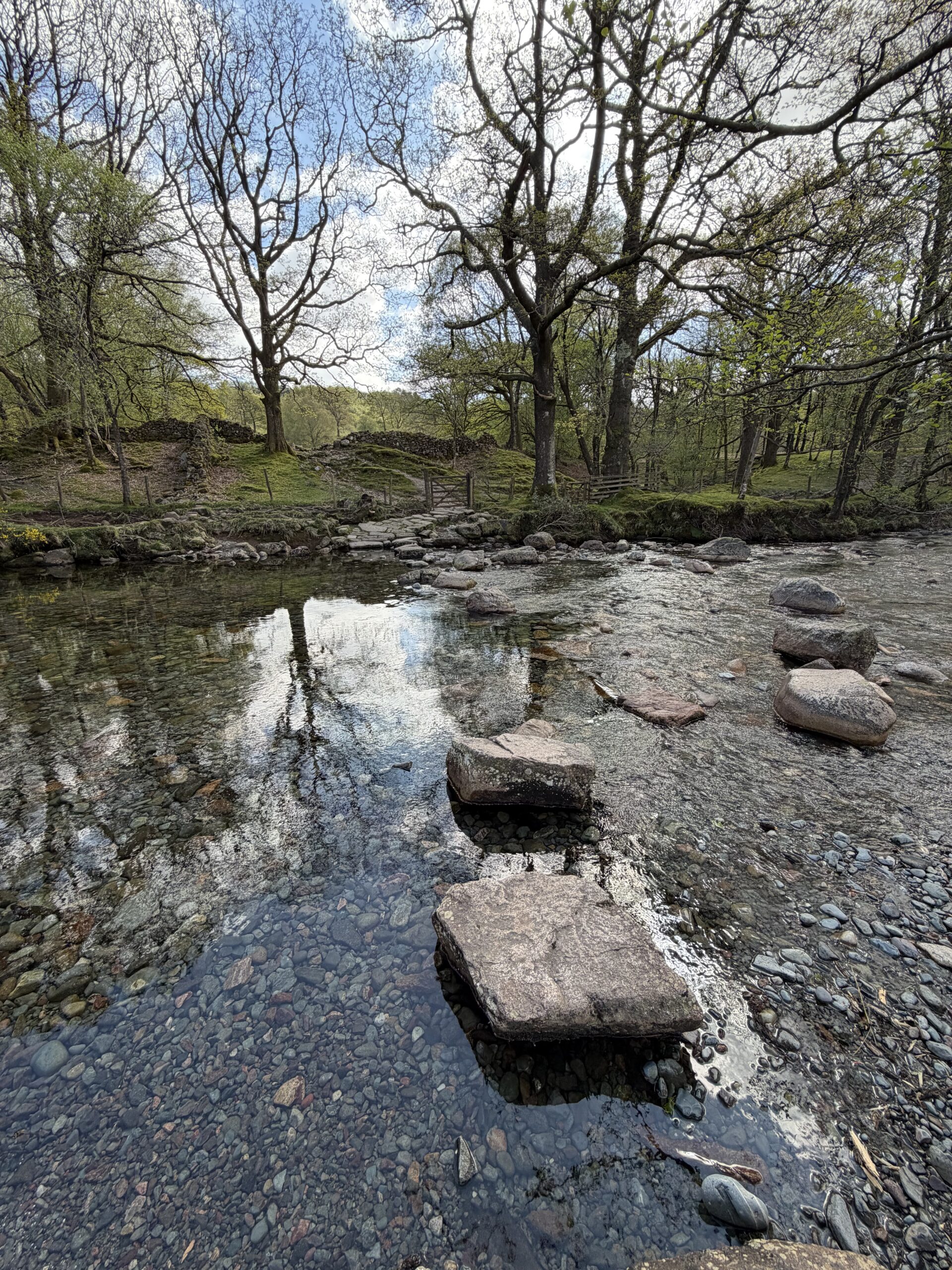
Leaving the church, we decide not to risk the stepping stones which are a bit wet and wander up to a footbridge crossing the River Esk by Gill Force then head back on a forest track.
On the way we pick up a walking companion, a lady approaches us looking for Stanley Force but is hopelessly lost as all she has is Google maps which is frozen and was taking her in the opposite direction. Finding out that’s where we’re going she happily tags along.
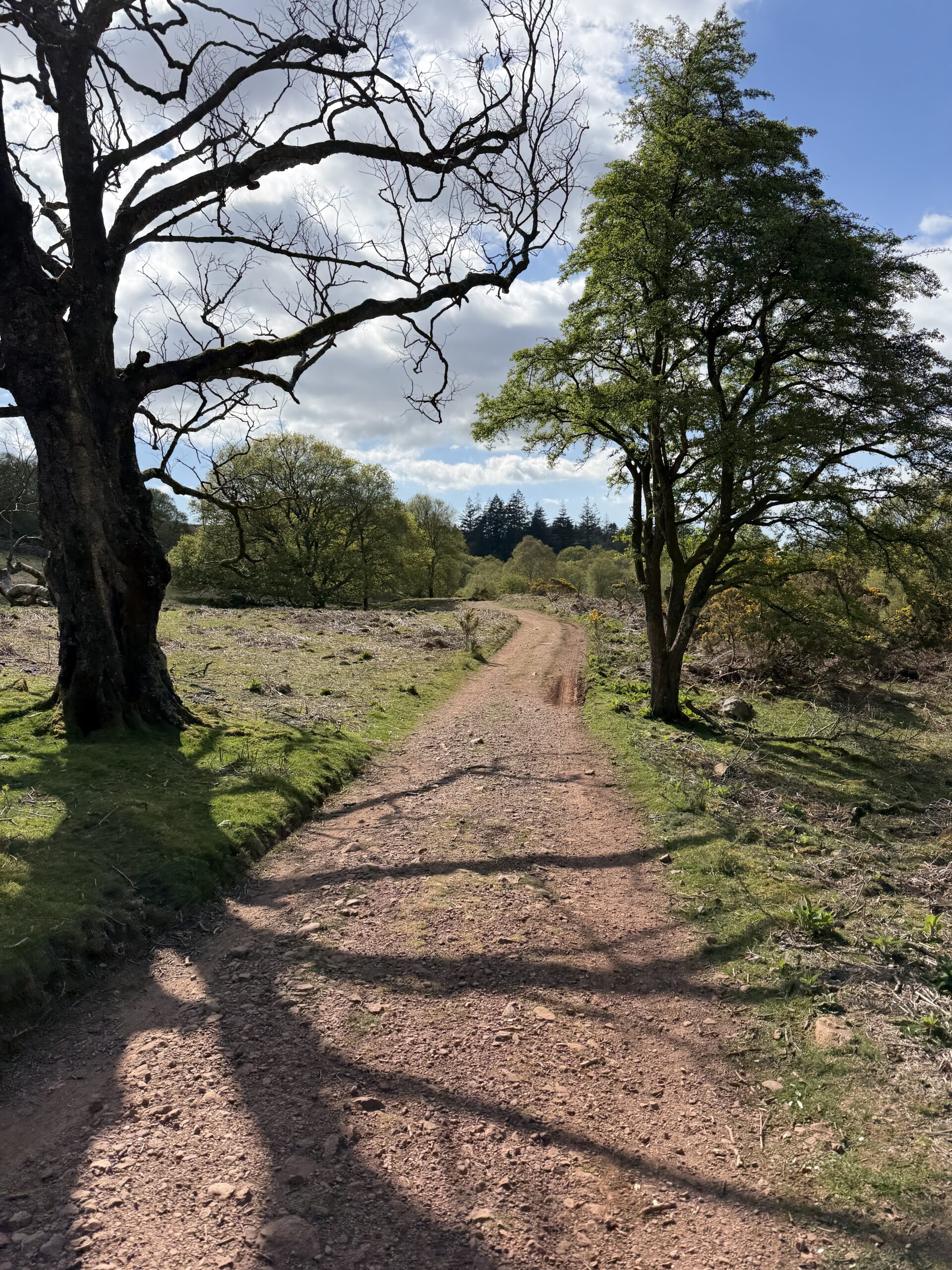
The track winds through trees and crosses a footbridge over the Ghyll before heading upwards and joining the footpath to Stanley Force where the walk changes from a stroll into something more like a hike.
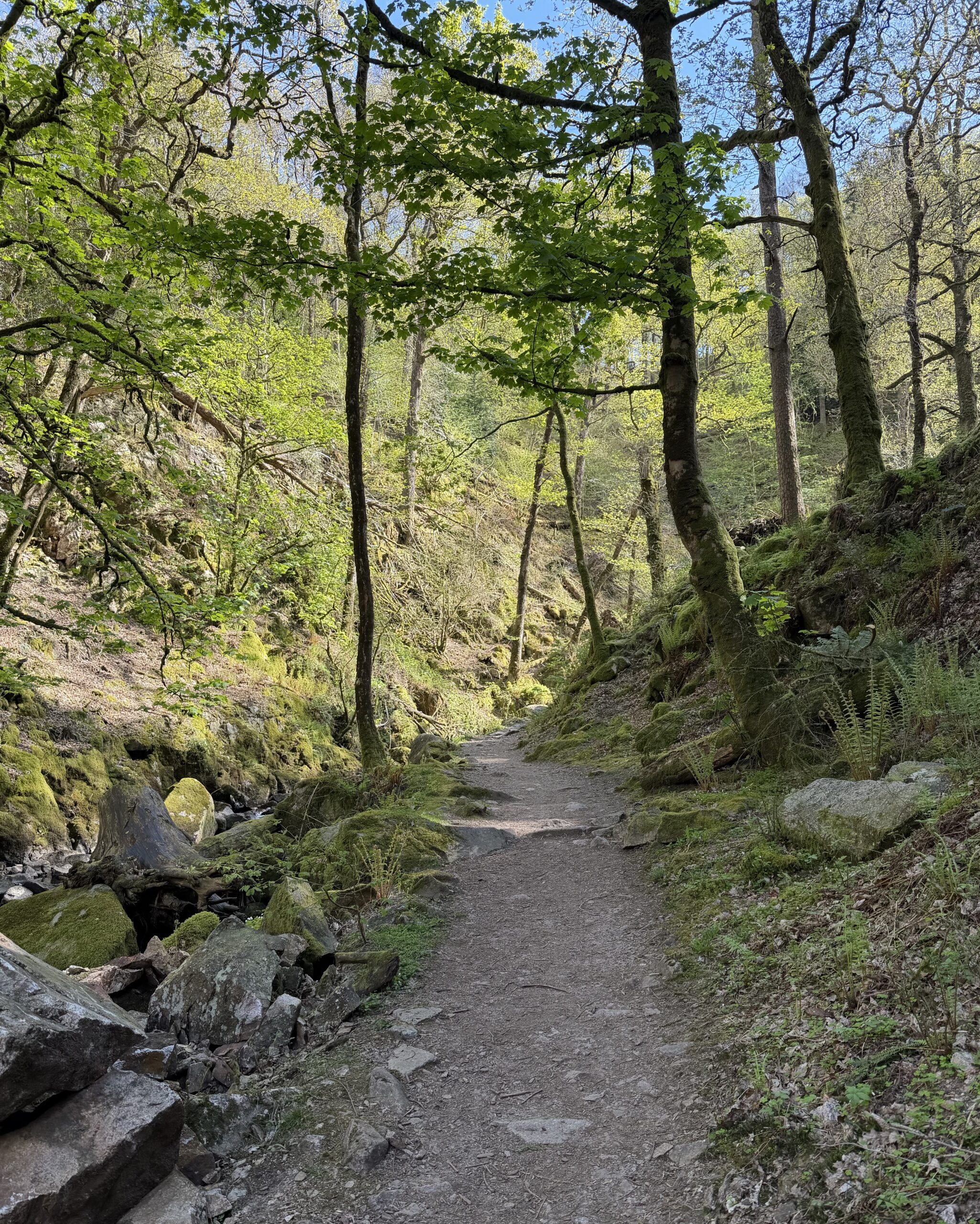
Stanley Ghyll Beck is rejoined and followed upwards through an increasingly narrowing, steep sided valley that is carpeted with mosses, ferns and lichen covered rocks. We are entering a rich world of dark dampness where sunlight is scarce and the musty smell of decaying wood and wet earth starts to fill our nostrils.
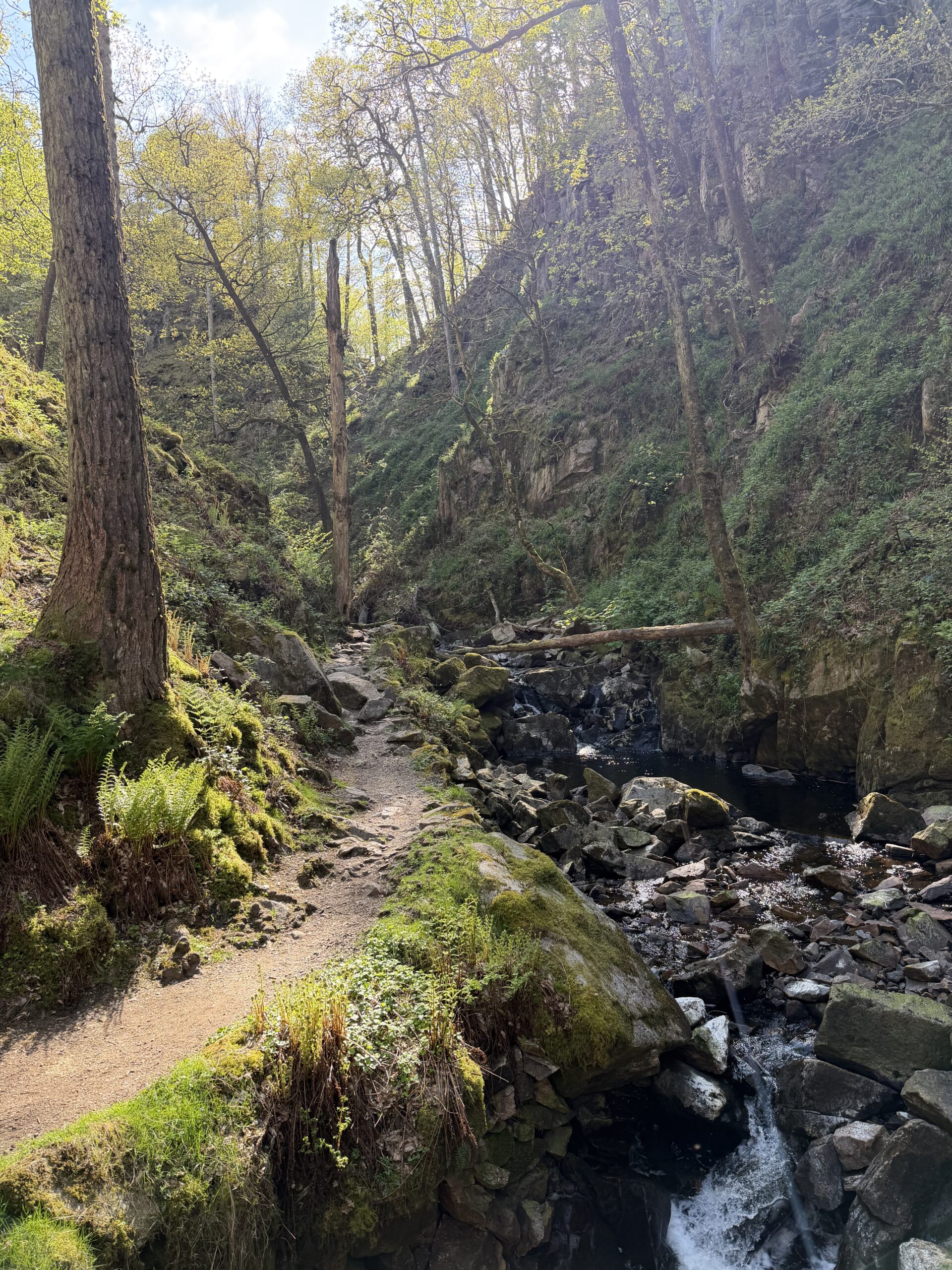
The Lake District National Park website describes Stanley Ghyll as “one of the finest waterfall ravines in the Lake District” and who am I to argue with that. It’s also quite rightly an SSSI.
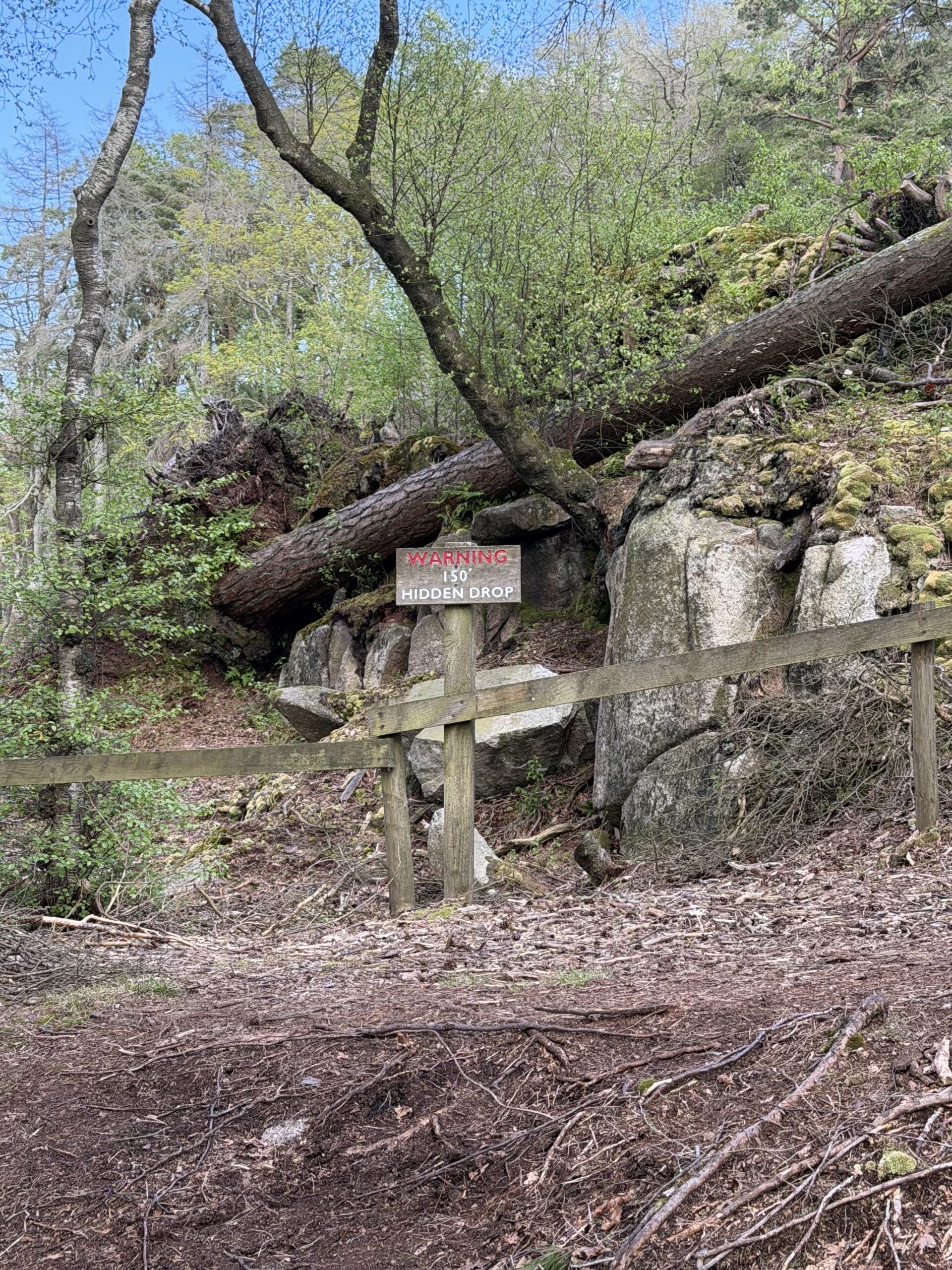
The path itself, not wanting to be outdone by the grandeur of the gorge becomes rougher, rockier and steeper as, Indiana Jones like, we venture ever upwards past signs warning of vertiginous hidden drops and instructions to stay on the path.
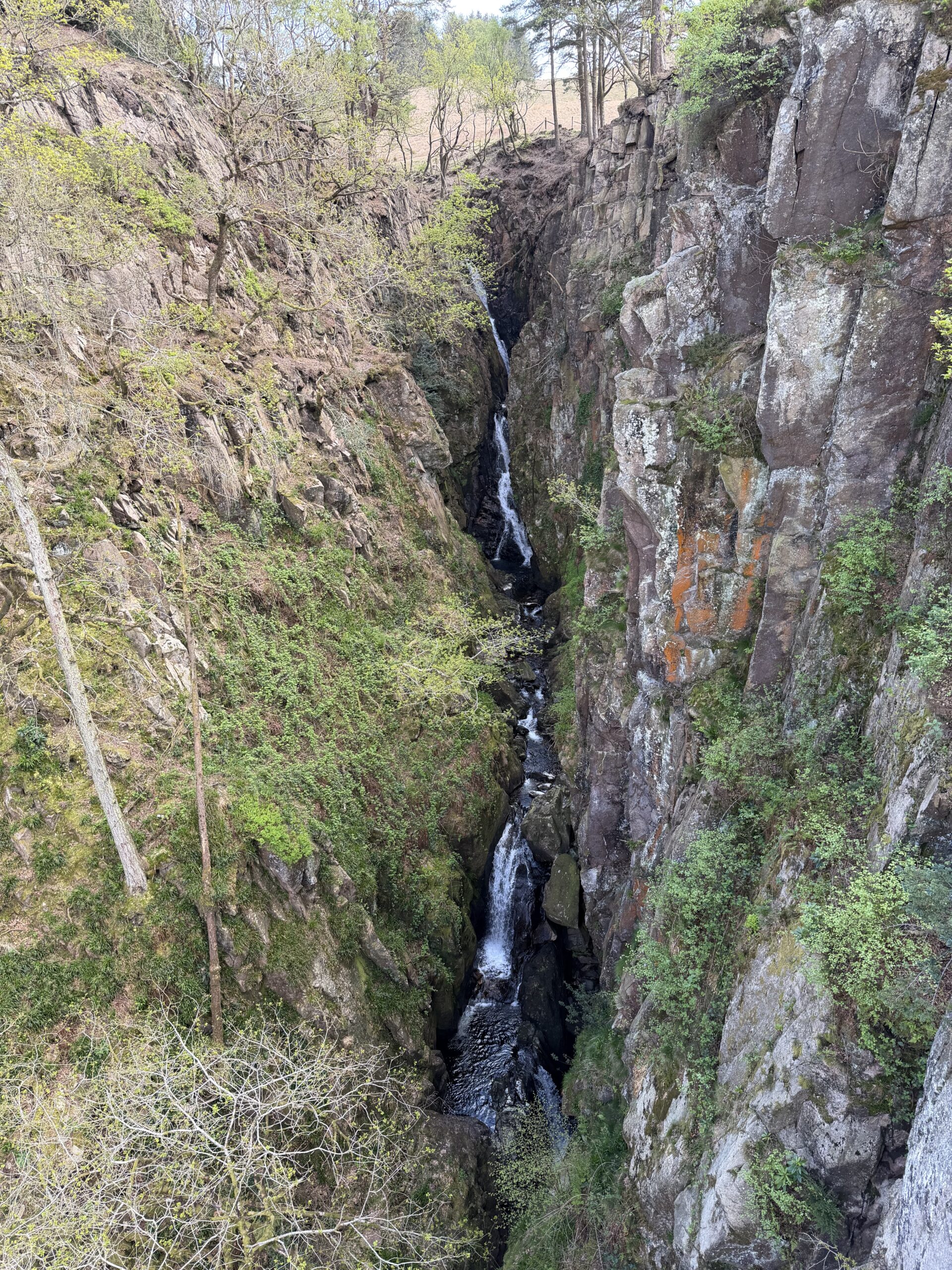
Eventually we pop out onto a solidly built steel viewing platform, looking rather incongruous to its surroundings but giving airy views over the gorge and Stanley Force, ‘safe excitement’ as the National Parks website describes it. In the other direction Scafell rises up over the green and pleasant fields of the Eskdale valley.
Stanley Force or Stanley Ghyll Force if you prefer drops about one hundred and fifty feet over several platforms with the longest single drop being sixty feet. It’s an impressive site, perhaps less so than Birker Force which lies just along the valley and was visited on my Green Crag walk but its nearness to Ravenglass and Eskdale railway and relative accessibility makes Stanley Force a popular excursion to take from the station, hence the money spent on a viewing platform I suppose.
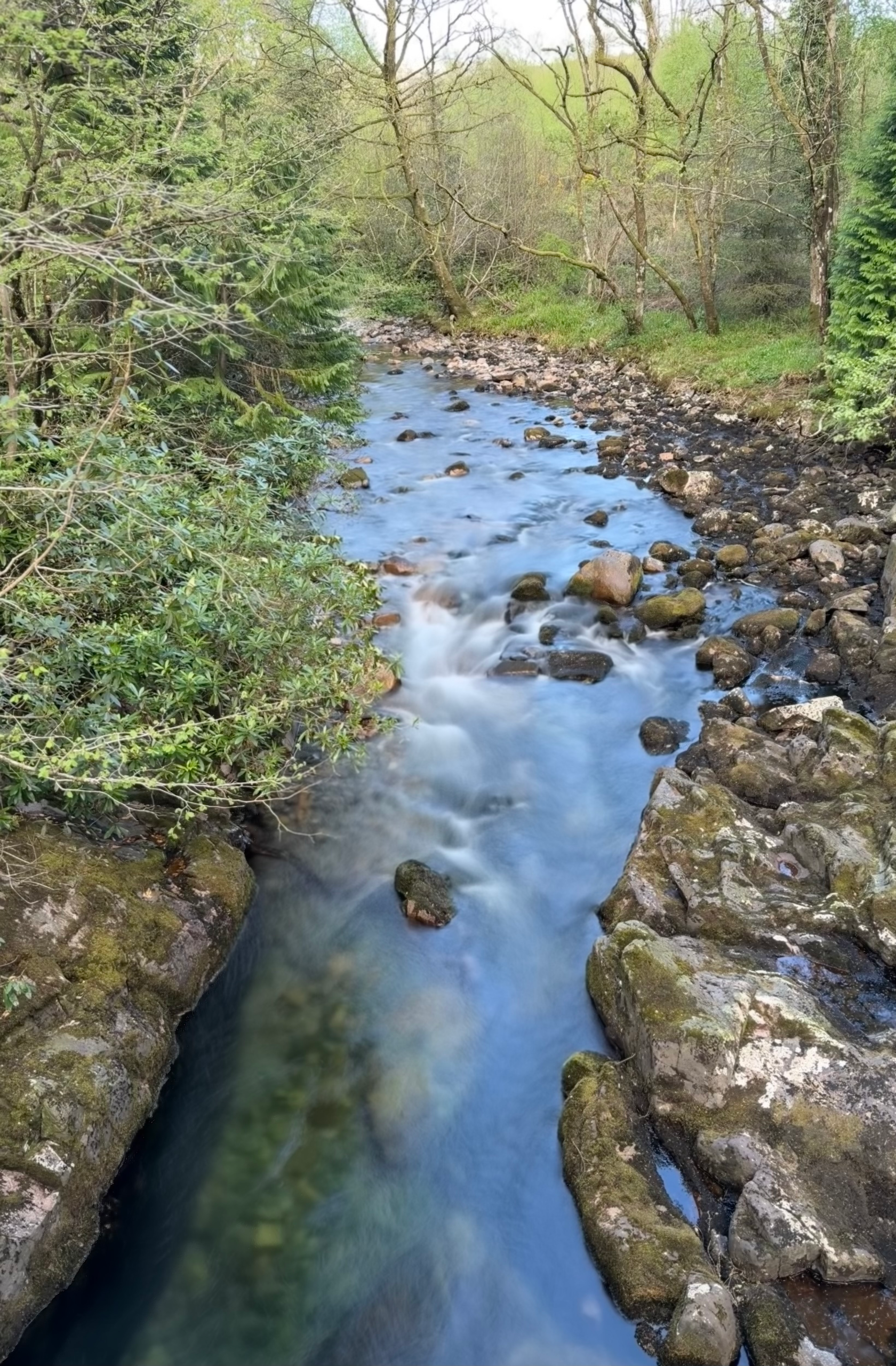
From the platform we drop off steeply the way we came and before long are back on the forest track which takes us over the River Esk and back towards the road.
Just before the road is Eskdale War Memorial which I notice has engraved on the top of its front panel the full name of a female, it’s unusual to have a full name and more unusual that it’s female.
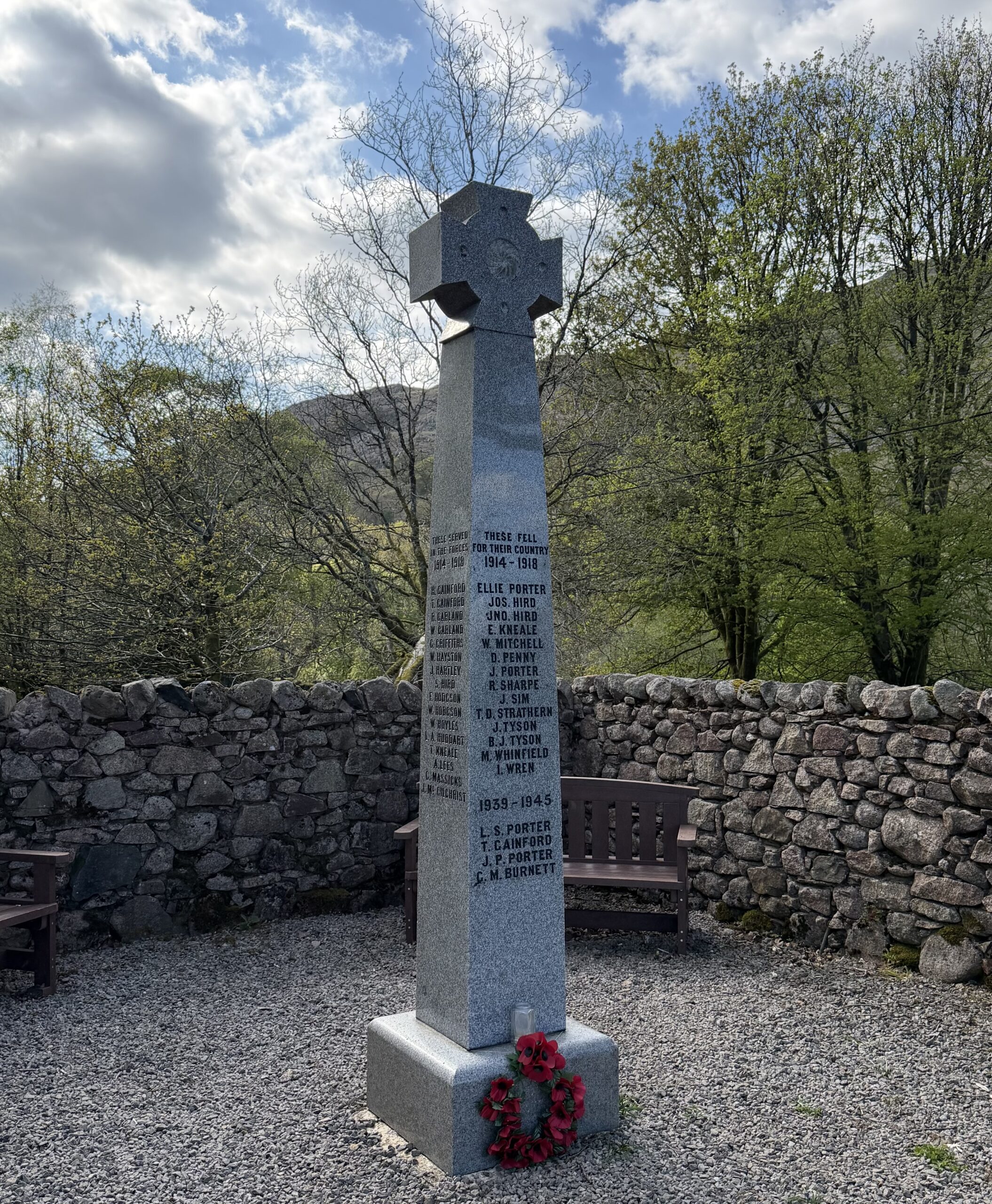
Ellie Porter was just nineteen years old when she died whilst serving in the Women’s Land Army during WWI. Her younger brother,….Lancelot Porter.
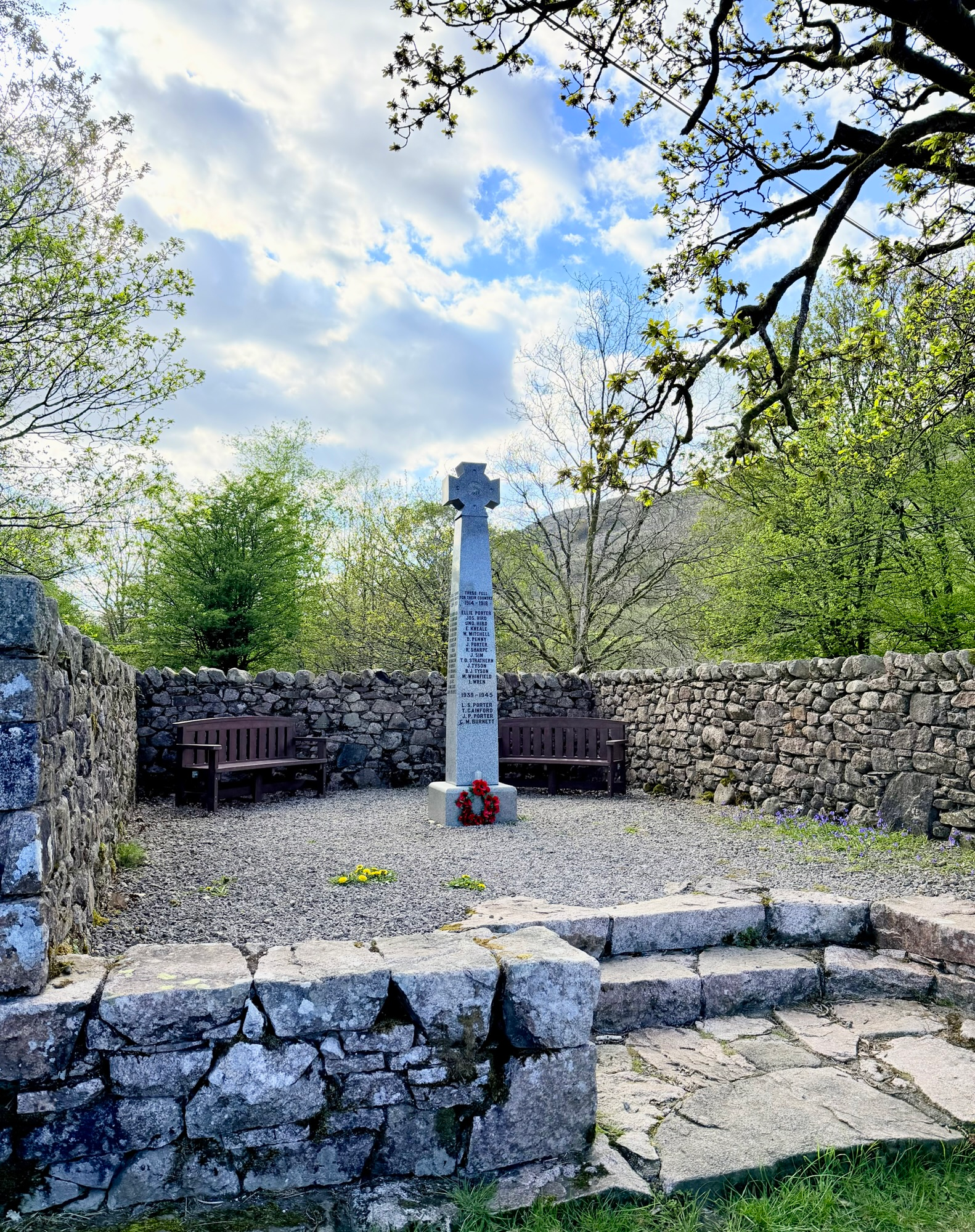
Lancelot Porter was six when his eldest sister died towards the end of the ‘War To End All Wars’. And little could he have known then that his own life would be tragically cut short just twenty five years later in yet another world war.
********************
Lancelot Porter never made it home to Eskdale, his remains lie in ‘some corner of a foreign field‘ in the CWGC cemetery in Mosul.
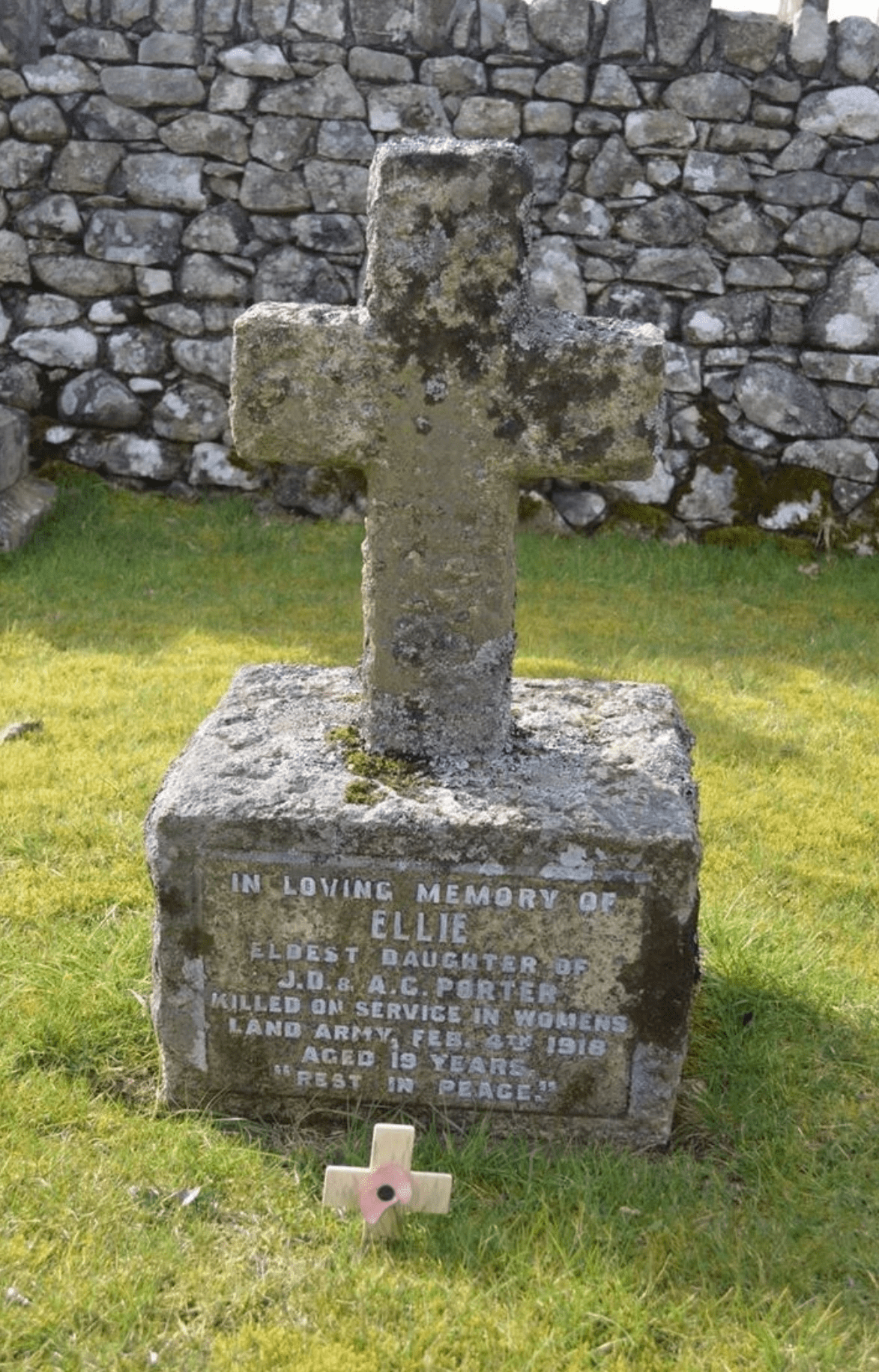
Ellie Porter is buried within the calm tranquility of St Catherine’s churchyard, not far from her brothers poetic memorial. The inscription on her headstone reads ‘Rest in Peace’.
*****************
Peace. It’s a quantity in short supply at the moment, let’s hope for all our sakes it doesn’t run out.
To See More UK Walks And Trails Click Here
To see a map of this walk with stats, geolocated pictures and downloadable GPX click ‘Learn more’ below
This is a lovely walk, Jim, sensitively told. Yes- how many more young lives need to be sacrificed? Many thanks for sharing xx
Thank you Jo, it’s my pleasure and thank you for reading 😀
A nice walk Jim, I really love the steep gorge, it came up unexpectedly to me. Maggie
Thank you Maggie, yes it’s a short sharp shock! 😀
Jim, your daughter’s job would be interesting to do. I would happily walk around those paths, just lovely. Like the NZ men, many were boys who happily grabbed a spot to head off and do something useful, as many never had a job. Sadly, it was an illusion.
Thank you Suzanne, yes she loves her job and all the Terns are on their way to the southern hemisphere now! Yes it is a lovely walk, the lake district is gorgeous even without venturing onto the mountains 😀
I’m sure the bird watchers are waiting eagerly to welcome them 😉
The church is beautiful – amazing to think that stained glass is so old! And the views from that platform are stunning – a perfect spot from which to appreciate the waterfall 🙂 But your point about not listening to history is sadly very true.
Thank you Sarah, yes whoever made the decision to put the platform in was inspired. I think perhaps it also discourages people from trying to edge closer and get a better view on unstable and dangerous ground so it serves a safety purpose as well
Never ventured as far as the waterfall so its good to see it in your photos and video. Have been to the church though after a ride on the Ravenglass railway. Eskdale is a lovely spot and has lots to see outside the mountains
The railway is something I need to get round to doing one day
What a poignant post and walk. The area there is so peaceful and beautiful. I have been to the Stanley Ghyll Waterfall and stood on that viewing platform. I have also been swimming in the mill pond behind the old mill at Boot which has a little waterfall too.
Thank you Shazza it is a lovely area, I’m not one for swimming, inside or out but I expect it was a nice experience, maybe a bit cold?
It was pretty chilly!
A lovely and inspiring walk. Any walk that includes a waterfall is a worthy one.
Neil S.
Thanks Neil, agreed about a waterfall!
A less visited part of the Lake District, although the l’al ratty makes it accessible. Looks like a good walk and an interesting little church Jim. Have to agree with your reflections from the churchyard.
Thanks Mike, I mentioned to someone else that I’ve never been on that railway so need to correct that 😀
Nice walk Jim. We passed several time in front of this little church but never visited it.
Thank you Mél, as you know it’s a lovely area and the church is well worth a visit (if you like churches!) 😀